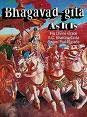
Arjuna blew a conchshell called Devadatta. Arjuna is referred to as Dhananjaya because he helped his elder brother (Yudhisthira) in fetching wealth when it was required by the king to make expenditures for different sacrifices (yajna). Arjuna’s conchshell was given to him as a gift by Maya Danava. This Maya Danava was the master of illusions and the architect of an extraordinary assembly hall at Indraprastha (near today’s Delhi) as the seat of capital of the Pandavas. Maya Danava found the conchshell from Bindu Sarovar to the east of Mount Kailash and presented the same to Arjuna. The sound of the conchshell could break the heart of any opponent as per Mahabharata.
Bhima is known as Vrkodara because he could eat as voraciously as he could perform Herculean tasks, such as killing the demon Hidimba. He blew the terrific conchshell called Paundra. King Yudhisthira blew Anantavijaya. The other Pandavas and the associate archers too blew their conchshells. All these names are mentioned in the verses (slokas) to indicate their relationship with the Lord. Everything and everyone connected with Lord Sri Krishna becomes Krishna or Krishnized or Krishna conscious.
Arjuna and associates were all very powerful. Nobody can be associate of Lord Krishna without being very, very much advanced. Just like fire can mix with fire, water can mix with water; similarly, unless one is transcendentally advanced, he cannot be associate of Lord Krishna. Hence the conchshells blown by the different personalities on the side of the Pandavas, beginning with the Lord’s, were all very encouraging to the fighting soldiers. The message announced by the sounds of the conchshells was the predestined victory in battle due to the presence of Lord Krishna, the supreme director and the husband of the goddess of fortune.
When Bhisma and the others on the side of Duryodhana blew their respective conchshells, there was no heart-breaking on the part of the Pandavas. Vibrating both in the sky and on the earth, the uproarious sounds of the conshells of the Pandavas shattered the hearts of the sons of Dhrtrarastra. This is due to the confidence of the Pandavas in Lord Krishna. One who takes shelter of the Supreme Lord has nothing to fear, even in the midst of the greatest calamity.
Showing posts with label conchshell. Show all posts
Showing posts with label conchshell. Show all posts
Saturday, November 7, 2009


Friday, November 6, 2009
Bhagavad-gita Verse 1.14 – 1.19 Blowing of Transcendental Conchshell
 Lord Krishna and Arjuna stationed on a great chariot drawn by white horses then sounded their transcendental conchshells (divya sankha). The sounding of the transcendental conchshells indicated that there was no hope of victory for the other side because Lord Krishna was on the side of the Pandavas. Victory is always with persons like the sons of Pandu because Lord Krishna is associated with them.
Whenever and wherever the Lord is present, the goddess of fortune (Lakhsmidevi) is also there because the goddess of fortune never lives alone without her husband. Therefore, victory and fortune were awaiting Arjuna, as indicated by the transcendental sound produced by the conchshell of Lord Vishnu or Lord Krishna.
Lord Krishna blew His conchshell called pancajanya. After shifting to Mathura from Gokula, arrangements were made for Lord Krishna and Balarama to live under the instructions of Their spiritual master, Sandipani Muni in Ujjain. In return for the learning received, They seeked to serve Their teacher with some offering or guru-dakshina. Sandipani Muni asked for the return of his dead son, who had drowned in the ocean on the bank of Prabhasaksetra. Lord Krishna and Balarama immediately went to the beach and asked the controlling deity of the ocean to return the son of Their teacher. The ocean deity informed, “The boy was not actually taken by me, but was captured by a demon named Pancajana. This great demon generally remains deep in the water in the shape of a conchshell. The son of Your teacher might be within the belly of the demon, having been devoured by him.” On hearing this, Lord Krishna dove deep into the water and caught hold of the demon Pancajana. He killed him on the spot, but could not find the son of His teacher within his belly. He took the demon’s dead body (in the shape of a conchshell) and returned to His chariot on the beach. Thereafter He along with His elder brother Balarama went to the residence of Yamaraja and blew His conchshell named pancajanya. Yamaraja received his Master with all respectful obeisances and returned the teacher’s son.
Tuesday, November 3, 2009
Bhagavad-gita Verse 1.12 - 1.13 Bhismadeva’s Blowing of Conchshell
In the beginning of the battle of Kurukshetra, Bhismadeva blew his conchshell very loudly making a sound like the roar of a lion. This caused two effects. He could understand the inner meaning of the heart of his grandson Duryodhana, and out of his natural compassion he tried to cheer the prince by blowing his conchshell very loudly, befitting his position as a lion. This gave Duryodhana false joy and made the Kauravas to sound their conchshells, drums, bugles, trumpets and horns causing a combined tumultuous sound.
What is the symbolism of sankha or conchshell? Before and after arati (worship), conchshell is blown to herald auspiciousness. Lord Sri Krishna is all auspiciousness and Bhismadeva acknowledged the presence of the Supreme Lord by blowing the conchshell. Indirectly, by the symbolism of conchshell, Bhismadeva informed his depressed grandson Duryodhana that he had no chance of victory in the battle, because the Supreme Lord Krishna was on the other side. But still, it was his duty to conduct the fight, and no pains would be spared in that connection.
Conchshells and cow dung are nothing but the bones and the stool of some living entities, but according to the Vedic version they are both considered very pure. According to Vedic principles, bones and dung are generally considered very impure. As per Vedic injunction, if one touches a bone or stool, he must take a bath immediately. Yet the Vedas also enjoin that a conchshell, although the bone of an animal, and cow dung, although the stool of an animal, are very sanctified. Even though such statements appear contradictory, on the basis of the Vedic version we still accept the fact that conchshells and cow dung are pure and sanctified.
What is the symbolism of sankha or conchshell? Before and after arati (worship), conchshell is blown to herald auspiciousness. Lord Sri Krishna is all auspiciousness and Bhismadeva acknowledged the presence of the Supreme Lord by blowing the conchshell. Indirectly, by the symbolism of conchshell, Bhismadeva informed his depressed grandson Duryodhana that he had no chance of victory in the battle, because the Supreme Lord Krishna was on the other side. But still, it was his duty to conduct the fight, and no pains would be spared in that connection.
Conchshells and cow dung are nothing but the bones and the stool of some living entities, but according to the Vedic version they are both considered very pure. According to Vedic principles, bones and dung are generally considered very impure. As per Vedic injunction, if one touches a bone or stool, he must take a bath immediately. Yet the Vedas also enjoin that a conchshell, although the bone of an animal, and cow dung, although the stool of an animal, are very sanctified. Even though such statements appear contradictory, on the basis of the Vedic version we still accept the fact that conchshells and cow dung are pure and sanctified.
Subscribe to:
Posts (Atom)